PUSH STICKS
For the last foot
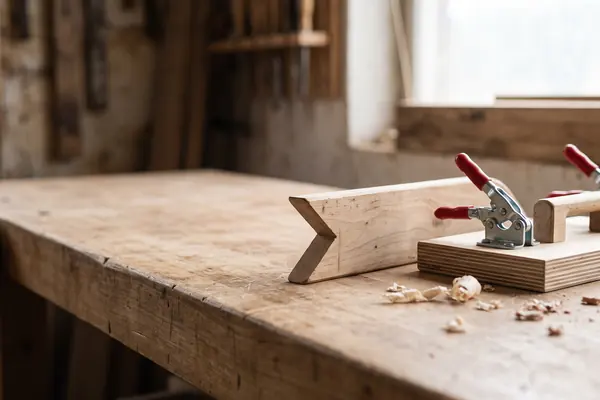
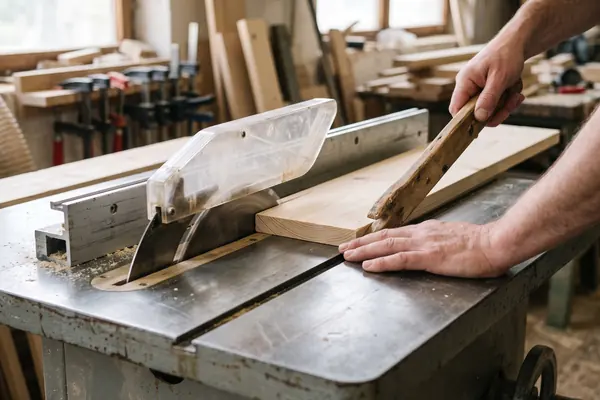
US shop rules say to use a push stick for any piece under 1 foot (30 cm) long and for the last foot of a longer cut, with hands out of the line of the cut.
Check a cut doodlejigs
00WHAT WORKSHOP GUIDANCE SAYS
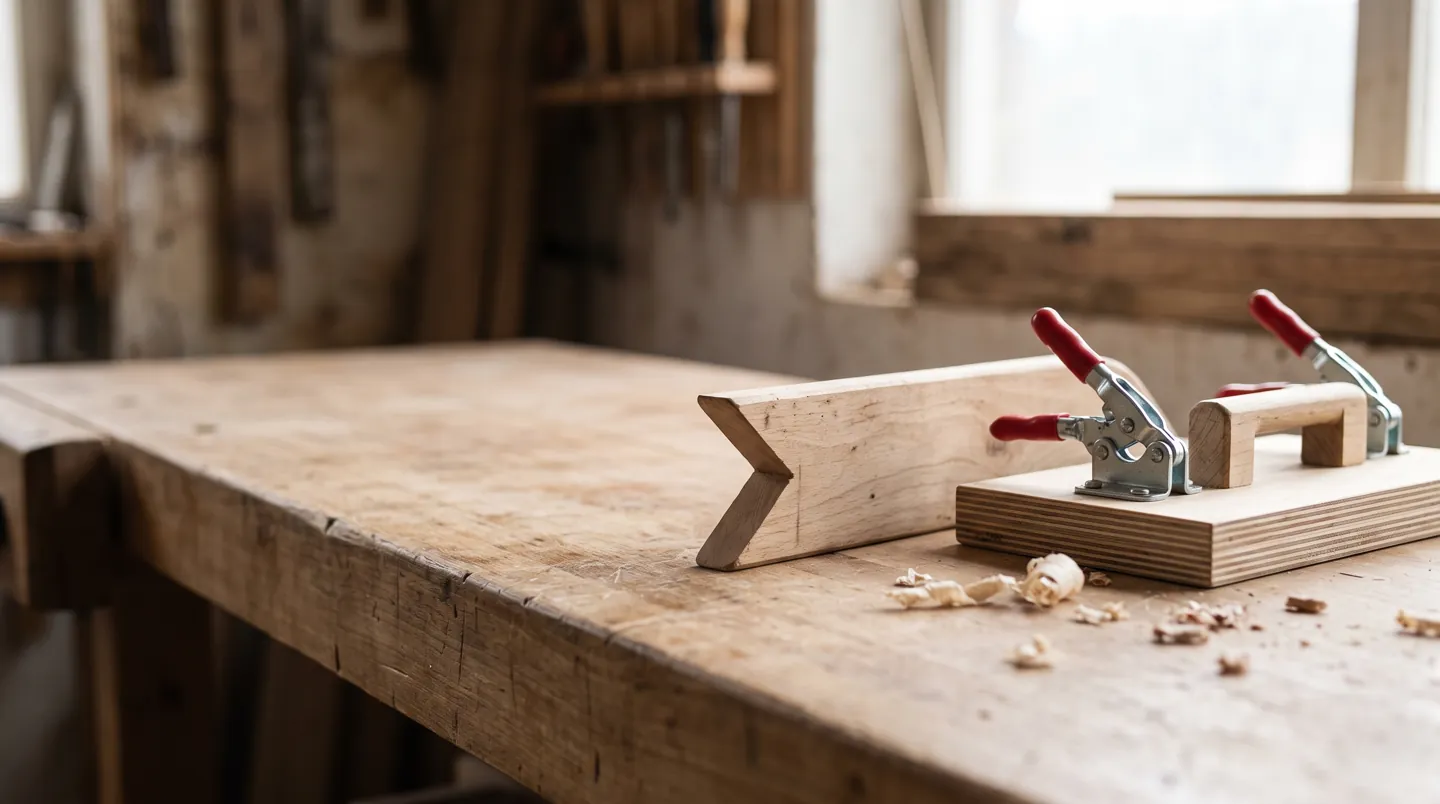
Your fingers never need to.
OSHA's woodworking guide says workers are hurt more often and more severely on circular saws than on band saws, and a blade can take off fingers. Its advice keeps returning to simple tools: guards, push sticks, jigs and featherboards.
Check a cut01Principles
02THE SHORT ANSWER
Guides written for workplaces, useful at home.
The aim is the same: hands never near the cut.
PUSH STICKS
US shop rules say to use a push stick for any piece under 1 foot (30 cm) long and for the last foot of a longer cut, with hands out of the line of the cut.
Check a cutJIGS
On shapers, OSHA says to use templates, jigs and fixtures to keep hands away from the cutter, with guide pins to hold the stock for curved work.
What makes a good jigTHE BASICS
A jig is not a substitute for guarding. OSHA lists lacerations, amputations and severed fingers among common woodworking injuries.
See the numbers03A QUICK CUT CHECK
Pick a job to see what US shop-safety guidance suggests for keeping your hands clear. The bar shows how strongly the guidance points to a push stick, jig or holder.
Based on OSHA's woodworking standard, guide and eTool, and US university shop rules. Written for workplaces; it is general information, not a substitute for training on your machine.
04TWO NUMBERS WORTH KNOWING
Shop rules put a distance on safe practice,
and the injury numbers show why.
6 in
Hands this close mean a push stick
Push sticks, featherboards or hold-downs must be used for any operation that would bring the operator's hands within 6 inches of the blade.
HANDS · CAL POLY SHOP RULES
67,300 a year
Table saw blade-contact injuries a year
The CPSC estimated about 67,300 medically treated blade contact injuries a year, and about 11 amputations every day from contact with the blade.
INJURIES · CPSC
Cal Poly's rules also say the saw teeth should rise no more than 1/4 inch above the wood. OSHA requires hand-fed ripsaws to have a spreader and anti-kickback fingers.
05WHAT MAKES A GOOD JIG
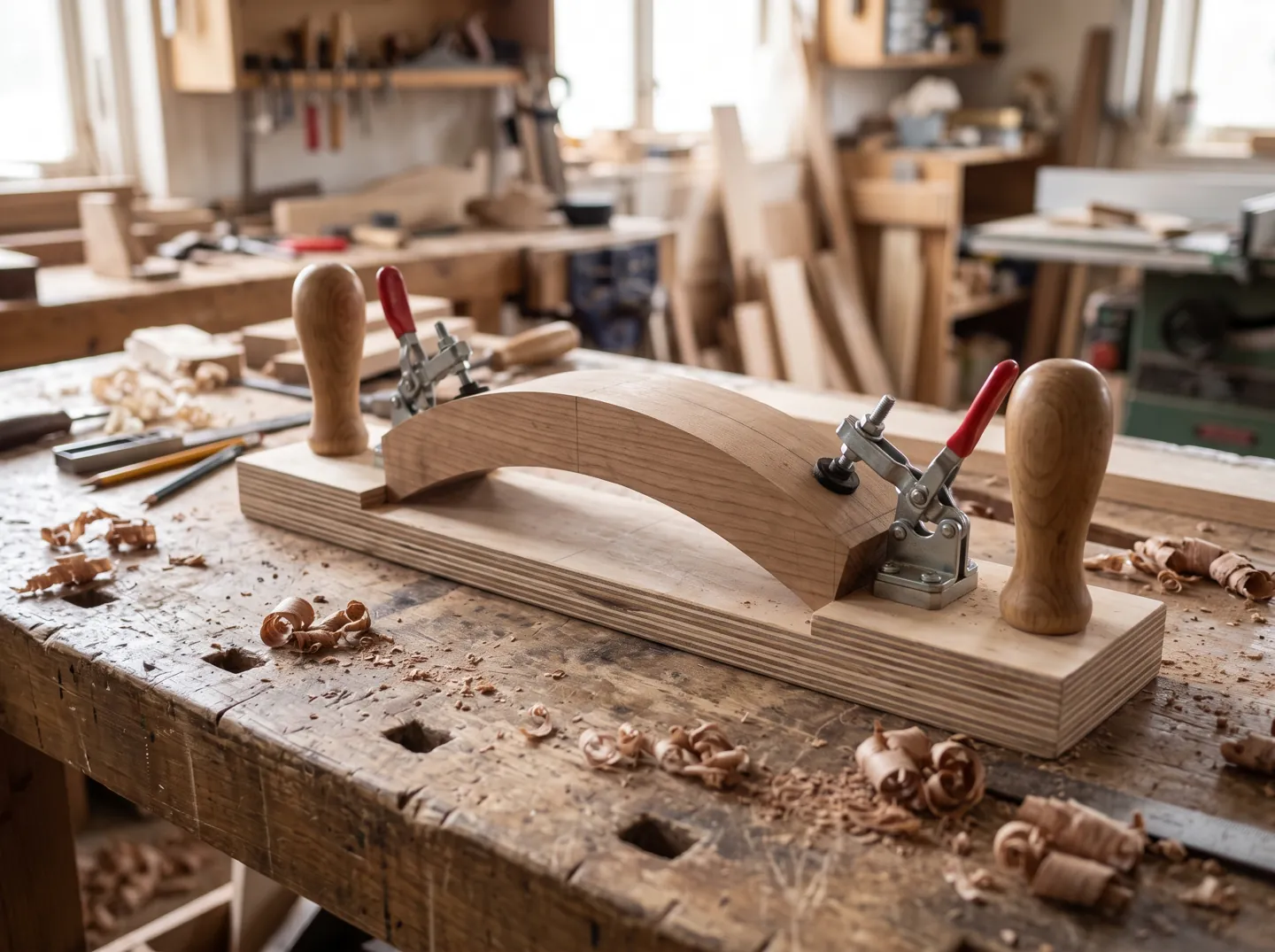
The UK safety regulator, HSE, describes what a shaper (spindle moulder) jig should do. The same ideas help with any home-made jig.
Jigs are typically made of hardwood and plywood; newer alloy designs also exist.
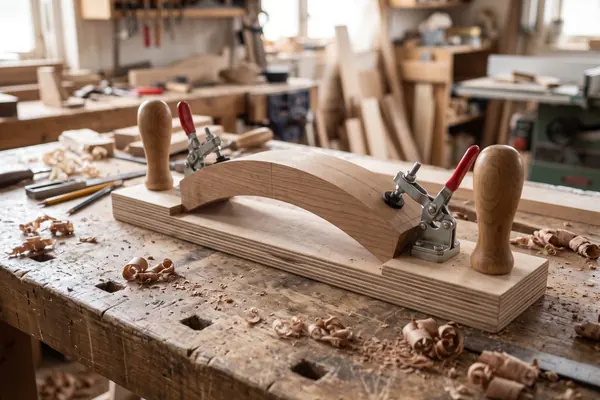
Hold the workpiece firmly, ideally with quick-acting toggle or cam clamps, so it cannot shift as it meets the cutter.
Secure handles and a wide base let you hold the jig firmly with your hands well away from the cutters.
For curved work, extend the template beyond the ends of the piece so it is controlled before and after the cut.
06WHEN THE GUARD CAN'T GO ON
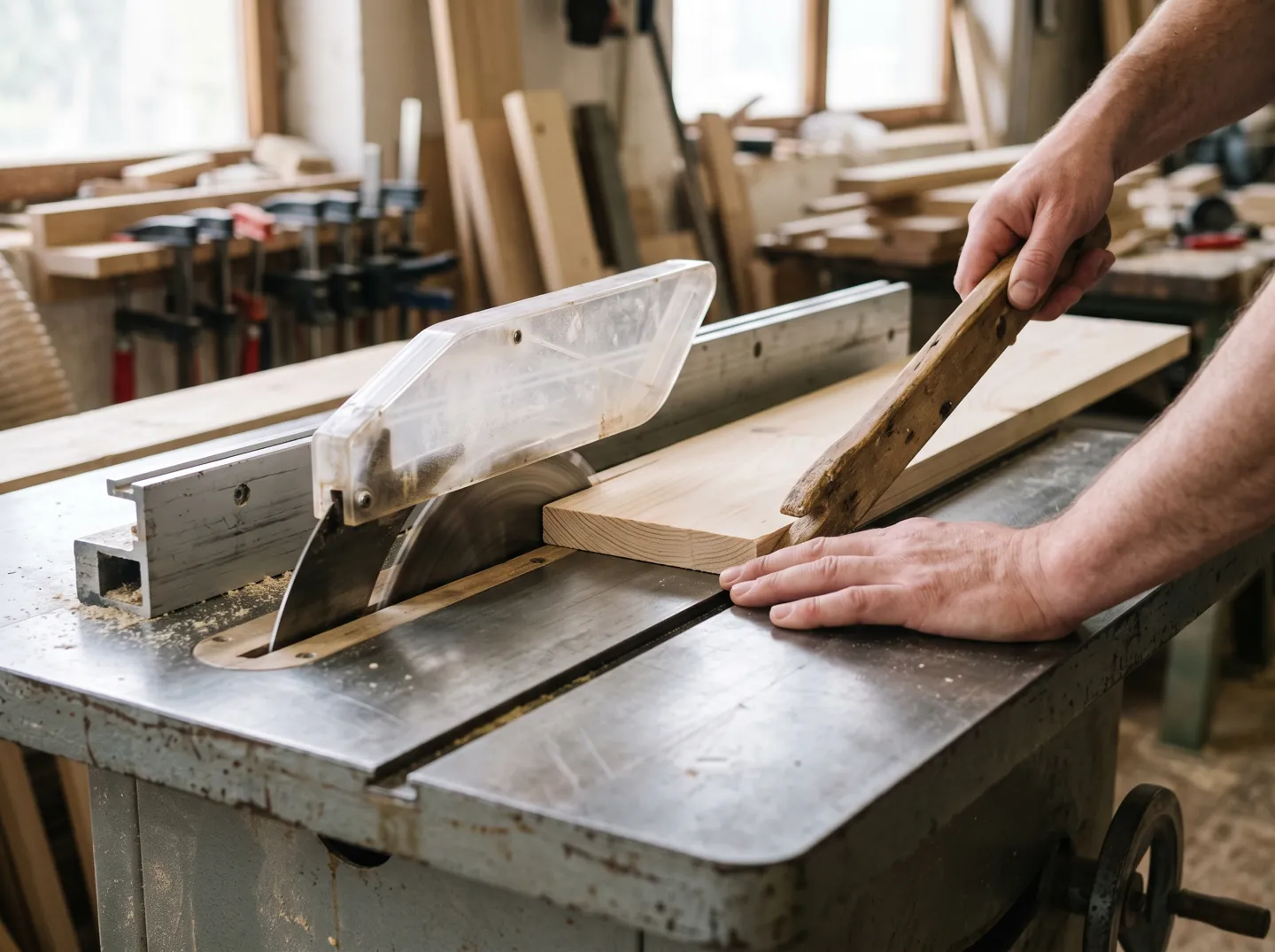
Some cuts cannot take the standard guard. OSHA names rabbeting and dadoing, and requires combs, featherboards or suitable jigs to hold the stock for them instead.
Dull or badly set saws must come out of service, as they can cause kickback, and gum on a blade should be cleaned off. Never clean a saw by hand or while it is running.
07Questions
A simple stick used to feed wood past a blade so your hand stays back. OSHA requires employers to provide push sticks or push blocks in the several sizes and types suited to the work.
EWU's rules say always for pieces under 1 foot (30 cm) long and for the last foot of a longer cut. Cal Poly adds: whenever your hands would come within 6 inches of the blade.
A holder that grips the workpiece and guides it past a cutter. OSHA says to use templates, jigs and fixtures to keep the operator's hands away from the point of operation.
It helps: OSHA says a spreader keeps the wood from squeezing the saw and kicking back during ripping. It does not keep fingers off the blade, so guards and push sticks still matter.
OSHA's rules and guides are written for employers and machine operators. This page uses them, with US university shop rules, as a guide for home workshops, where no employer sets the rules.
08Sources
ABOUT THIS NAME
doodlejigs.com is part of the DoodleSale portfolio. It isn't in an auction right now, but you can ask about leasing it.